Showing posts with label Analysis of Opening Sequence. Show all posts

Saturday, 7 January 2012

Inspiration And Analysis


Twilight


Twilight is another thriller which appealed to me due to the main location being the forest. As I saw this characteristic in many horror/thriller films, I thought it would be quite useful to use in our opening sequence. This is because it would immediately illustrate to the demographics that it is a thrill seeking film. 
Most of the eventful scenes that took place in this film were all situated in the forest. The forest acted as an indication to the audience that something peculiar is about to take place. This is the approach we hope to achieve. 

Horror Film Analysis


Monday, 2 January 2012

Monster House Opening Sequence Analysis


Monster House is aimed at children aged from 7 – 12 years. This is evidently illustrated by the visuals – it is animated. This automatically creates a light and calm atmosphere for the viewers. This is essential when targeting your film at the younger market as they will be aware it is surreal, thus it will not cause any psychological harm to any of them.
The title of the movie is emphasized through both visual and sound. The sound is built up and suddenly makes a large ‘bang’ sound as soon as the title appears. This helps to convey the genre of the film by making the audience suddenly jump from the unexpected sound and this creates a tensed atmosphere. The title is a large bold font and each letter looks as if it is in the shape of a house. The colour of the title is red which indicates negativity and danger. As the title appears, it gets larger and starts moving closer to the screen. This makes it seem as if the camera is going inside the title which designates that it is leading to something negative. 

Friday, 11 November 2011

Never Back Down Opening Sequence Analysis


Never Back Down was released on March 14th 2008 starring Sean Faris, Amber Heard, Eddie Hannush, Cam Gigandet and Dijmon Hounsou. It is an American action film - thus, even before watching the film, I already have assumptions of the typical conventions that I would expect
to be seeing in the opening sequence. This includes things like; fighting, dark colours, fast pace, etc. This movie was substantially popular with teenagers and young adults. The fact that the storyline is to do with achieving your goals, this appeals to this audience most as they can all relate to it. 
Although this is 10 minutes long, I will only be analysing the first 2 minutes and 23 seconds. It starts off with a fast tempo, tensed piece of soundtrack in the background - this starts to occur just before the credits. This immediately gets the audience weary (emphasising on the genre). The weather conditions are rainy, which created the mood for the audience. Rain is very commonly used in movies when a negative scene is being shown. The rain made the atmosphere very intense which enhanced the concentration of the rugby match for the audience. The fact that it started with this game (battle), made it highly conventional. All the main characters are students, making it relatable for the targeted audience - young adults/teenagers. The main 2 characters were evidently portrayed within the first 2 minutes as the commentator mentioned their names repetitively (Jake Tyler and Ryan McCarthy). These 2 characters were consistently being the centre of attention in the camera shots. There was a wide variety and a high quantity of camera angles/shots used (close-ups, extreme wide shot, over-the-shoulder shot, etc.), each lasting for a very short amount of time making it difficult to capture each one. This kept the pace moving fast - another factor which set the mood. 

Serendipity Opening Sequence Analysis

Serendipity is a 2001 romantic comedy starring John Cusack and Kate Beckinsale. This was mainly popular amongst adults due to its' intensity of romance. Also the romance element was between 2 adults which makes this less relatable for youngsters and teenagers. 
It immediately begins with a jumpy, happy song whilst the credits are occurring and the setting is being introduced. The music is very classical which allows it to be aimed at the targeted audience - adults. The opening sequence seems to last for 4 minutes and 19 seconds which is longer than what I have seen so far compared to others. Since it is longer than usual, it comes back to the genre - romantic comedy. This is because, longer opening sequences allow the extract to move at a gradual pace, decreasing the tension level. A number of basic, simple camera shots are used. This is because, in movies with similar genre to this, it is mainly about what you see in the screen in order to know what is happening. Everything in the frame is essential. Whereas, in horrors, they have many shots where it is oblivious to who and what is in the frame. This happens to enhance on the suspense. As the credits finish and it starts immediately in a shop, the 2 main characters are obviously shown as them 2 bump into each other wanting to buy the same item. The viewers instantaneously know that the love affair will be with these 2 later on in the film. As the opening sequence comes to an end, a restaurant called 'Serendipity' is shown. This answers the question to the viewers of why the movie is called this - it is obviously related to this shop. Viewers will now want to watch on to find out why the restaurant is crucial.


Death At A Funeral Opening Sequence Analysis

Death At A Funeral is an American comedy film released on April 16th 2010. Just by the title, one can easily say that it is a comedy due to the way they have shown the irony. This was very popularly appreciated by young adults and families due to its' comic elements. This film is a remake of a British film, made in 2007, with the same name.
The background music starts 25 seconds into the credits. The music seems to be quite cheerful and comic which is one of the ways the genre is conveyed. The credits and music goes on for 2 minutes and 57 seconds. This is quite long seeing as, most opening sequences last about this long. Whereas, the movie does not officially begin, making the opening sequence quite longer than average. This gives the film a relax feel - this emphasises the genre. If, for example, it were a horror, the opening sequence would be very fast paced and much more would have happened within these 2 and a half minutes.
During this time, while the credits are showing, a coffin is shown to be going somewhere. The way it is shown, looks like a navigation system but instead of a car it is a coffin. While it is finding its' destination, it forgets its' route and reverses back. This shows another element of comedy. As soon as the credits finish,immediately the scene fades into a man in a house watching and waiting for the coffin to come in. Showing the element of death instantaneously implies to the viewer that this theme will be seen more throughout the film. The mise en scene represents the situation that is occuring at the time by the costumes and props - black clothing and a coffin which illustrates the event taking place(funeral).


The Grudge 2 Opening Sequence Analysis


The Grudge 2 was released in North America on October 13th 2006 as a sequel to the 2004 American horror film - The Grudge. The Grudge was a remake of a famous film called Ju-on, however, the sequel is not. It was pushed forward a week from the original October 20th release date. The film was released in the UK on October 20th and in Australia on October 26, 2006. 
I will be analysing the opening sequence which is the first 2 minutes and 19 seconds. As it begins with the illustration of the institutions are (columbia and ghost house pictures), there is daunting music in the background. This immediately informs the audience what the genre is. What I found most interesting and would hope to do something along the lines of this if it is possible is the way they edited 'columbia's' credits. They turned the woman into the antagonist of the film. They also turned the word 'columbia' into 'the grudge 2' in fast motion. They carried this out through the change of font. This new font seems to portray knives, which conveys the plot rather well. They used a range of edits to enhance on the visibility of the genre, for example the flickering of the lights as the woman transforms into the grudge.
Once the film has begun, it starts off with a few slides, each saying something different. As it fades into the next slide, a word is kept at the end and turns red to emphasise on it, e.g curse. 
The low angle shot of the flats, which showed bare tree's and all you could hear were crows. This made it have a very suspense and cautious atmosphere. The main character does not have any dialect - this helps to keep her character in suspense and make the audience want to watch on. The opening sequence ends with her casually drinking tea while her husband is suffering on the floor. This makes her seem quite psychotic, adding another element to which the audience would expect to see more of throughout the film


Monday, 17 October 2011

Enchanted

The sequence opens with the typical shot of the mystical Walt Disney Castle; however there is a twist as the camera zooms into a window, where a book is revealed. The book is placed on a brown alter; similar to the opening of Snow White. This indicates that the film is based upon a fairytale animation, as this technique is a convention found in princess films. The camera steadily zooms into the title of the book from a high angle, where the name Enchanted is portrayed. This is written in a fairytale font which emphasises the genre of the movie. The book then gradually opens, where a 3D pop up image of a castle appears. This is a modern take on the typical opening of a fantasy book, as the pages tend to be flat; in Snow White. The narrator is heard saying ‘Once upon a time, in a magical Kingdom of Andalasia lived an evil Queen’. The opening statement is a stereotypical phrase that has commonly been used in many animation films. This highlights that the narrative is based upon the clichéd evil queen, attempting to eradicate the naive Princess. A countryside cottage is shown; the camera zooms into the window to reveal a beautiful princess dressed in a pink gown, with delicate rosebuds placed on her head, dreamingly dancing around. She is surrounded by talking creatures which emphasises the whimsical theme of Enchanted; similar to Cinderella and Snow white. She then begins to sing a cheerful song about ‘true loves kiss’. She is referring to Prince Charming, which is always an essential character in a Princes based blockbuster. An element of humour is intertwined where the Princess, Giselle, states ‘Before 2 become 1 there is something you must do’. The rabbit responds ‘do you pull each other’s tail? A bird replies ‘do you feed each other seeds?’ This comical naivety of the answers foreshadows to the viewers that there is yet more humour to be unveiled. The lighting is bright, and the colours are vibrant and nature is shown frequently, a representation of happiness. This indicates the simplicity and beauty of a typical princess’s life.


Flightplan

Flightplan begins with a passing yellow train; this enables the audience to decipher that the location of film is based in America, as this is the convention of the tube in America. The shot is rapidly cut by a blank screen which illustrates the opening credits. This is portrayed through a basic font in a white colour, and for a dramatic effect, high pitched sound is added which enhances the movement of the train. The previous shots fades into the next shot, and the camera steadily zooms into the back of the protagonist head. A match on action is used shortly, which presents the facial expression of the central character as the camera is in a front angle. The camera zooms into her face and we can see she is distressed as she has tears in her eyes. The title appears to the right in a similar white font text, which contrast heavily with the background. The purpose of this is to draw the audiences’ attention to the name of the film. This is followed by a rapid fade into the next shot, intertwined with a sound of a triggering gun; illustrating the genre of action in the film. An open casket is revealed, related to previous sound, through a wide shot. This highlights the genre of mystery as the viewers want to distinguish who has died. A man walks towards the protagonist and asks ‘Would you like a moment of privacy before the casket is sealed?’. The protagonist gently nods her head. The lady is dressed in black as a sign of respect for the corpse. The lighting is blue and dark. This creates a tragic and intense atmosphere, which emphasises the bereavement that has previously occurred. The opening sequence foreshadows what the film might be based upon.


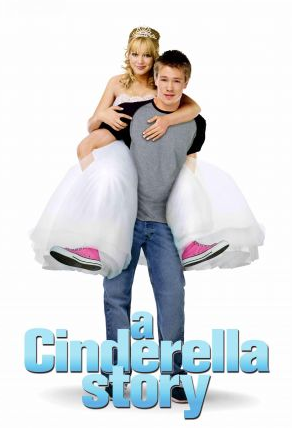
A Cinderella Story

Cinderella Story commences with the introduction of the Warner Bros Company as they are presenting the film. The opening shot the viewers perceive is a blank shot, followed by a mystical soundtrack. The next shot is an establishing shot of a ‘far far away Kingdom’; which the protagonist is narrating. The purpose of both these elements is to introduce the audience into the romance / chick flick genre of Cinderella Story. The protagonist narrates a brief story about a little girl and a widowed father; explaining her reality. This allows the audience to gain an insight into the main characters life, which creates a sense of identification to the character. The next shot is a graphic match of the ‘far far away’ castle to a castle in the girls’ snow globe. Subsequently a two shot of the girl and the father is presented, as it highlights to the audience the special bond and close relationship they share. A whip pan shot is closely shown as the camera moves sideways rapidly, the image becomes blurred into indistinct streaks, with a background sound of traffic. The next shot seen is an establishing shot which presents the location of the film, San Fernando Valley; a fertile valley in southern California to the north of Los Angeles, which includes many residential communities. This contrasts dramatically with the stereotypical location of a fairytale setting; usually in an enchanted forest. The opening credits appear on screen, from the writers and directors of the movie, to the main star; Hilary Duff. The font is written in a curly writing in a bright pink colour as these appeals to the target audience. A wipe is used to indicate ‘Hal’s Diner’; the fathers place of work. The lighting is bright, the colours are vibrant, cheerful music is played and the customers’ facial expressions are happy. This creates a close sense of friendship within the community. It also signifies the stereotypical life of fairytale stories. The theme of humour is emphasizes when Hilary Duff talks about her fathers’ diner, stating ‘A place where DIET was a 4 lettered word, and grease came with no additional charge’. This captivates the audiences’ attention in witty humour, and foreshadows upcoming humour that is yet to be unleashed during the rest of the film.


The Ring

The sequence commences with a dark lit kitchen; typical convention of the genre of horror. The colours are dull which helps create a tense atmosphere. The extract progresses by a close up of a teenager; enabling audience to see the visible distress in her facial expression. This enhances the anxiety within the audience as we can sympathise with the character. The camera steadily moves into the living room, where a TV automatically turns on to reveal a fuzzy black and white screen. The girl declares ‘if you’re being a bitch, where’s the remote?’. A shot of the remote is seen on the sofa. The girl abruptly grabs the remote and turns of the TV. As she walks into the kitchen, the TV repeatedly turns on once again. She becomes panicked and runs towards the TV and rips out the fuse; electric current is shown. She leans in towards the screen, and a sudden movement from the kitchen becomes visible from the reflection. She sprints across to the kitchen, and sees an open door fridge. She slams the door of the fridge shut. The next shot shows a high angle shot of the character at the bottom of the stairs. The purpose of this is to enhance her vulnerability in this situation. As she walks upstairs, a puddle of water is seen on the floorboard. The water is shown coming out of a room. As she turns the door knob, there is a point of view shot of a TV screen. It illustrates a blue lit secluded forest with a well, surrounded by skeletal trees. The camera zooms into the girl to reveal her screaming action. A continuous rapid fast paced shot of a disfigured mouth chewing on a finger, a box of chopped fingers, a gold ring, a ladder with its reflection, a window of a house and the fuzzy black and white screen emerges.


How effectively does the opening sequence from 'Children of Men' (2006) use the forms and conventions of film openings? What is your personal response as a member of audience?

‘Children of Men’ explores an era of dystopian United Kingdom in the year of 2027. The human race has become infertile which has lead to severe oppression as the world has fallen to war.
The purpose of opening sequences is that it encourages the audience to carry on viewing the rest of the film. It also hints at the life of the protagonist, the core themes that run throughout the film and also the environment which the story is based upon. Occasionally the opening sequences help to enhance the baseline of the narrative. Pace is also a crucial element of a film as it helps to create either an upbeat atmosphere or a sinister environment. Another essential element in a narrative structure is the use of mise-en-scene i.e. sound track, costume and makeup. The soundtrack constructs the atmosphere of the film and the costume and makeup help highlight the characteristics, personality and position of status of each character. It can also signify whether the film is set in a futuristic era, and the society in which the plot unravels in. All of these codes and convention help enhance the opening sequence of a film in a more effective manner.

In media there are many conventions that are commonly used in the production of films which enhance the basis of an opening sequence. For example a narrative function that is frequently used is that the protagonist is introduced to the audience. This is presented in the first extract of ‘Children of Men’ as the audience can immediately recognise that Clive Owen obtains an imperative role in the film. This becomes apparent in the sequence which shows a crowd emotionally depressed and genuinely mortified at the death of the youngest person on the planet. The news broadcast follows the typical convention of a bulletin due to text such as ‘Breaking News’, the mid-shot of presenter and also distorted clips and use of date. This is shown on a TV screen at a cafe stating that the world has descended into chaos. Diversely Clive Owen cuts sharply through the crowd to order a coffee. His sheer lack of interest in the news of the death of ‘Baby Diego’ becomes evident as he instantly stands out from the sheep like crowd. This emphasises his importance and captivates the attention of the audience to this character; rather than a member from the crowd.  A tracking shot is also used to follow only his actions; therefore is audience able to connect with his life. For example we can see him add some alcoholic drink such as whisky to his ‘morning coffee’. This signifies that Clive Owen is going through a difficult phase in his life.

A narrative convention of an opening sequence is the establishment of a core theme and iconography of the film. In ‘Children of Men’ this is presented while the protagonist, Theo Faron is continuing with his daily routine by fixing up his drink, when abruptly an explosion occurs due to terrorist bombing. This signifies and foreshadows the key themes that will run throughout the film; such as, Mystery as the audience gains enigma as they question why the population is infertile and Drama due to terrorist attacks. This also signifies that there is still a continuous civil unrest (siege) in the future; similar to the present time.

Media language is also essential in the production of a movie. In this extract, the lighting is dull which carries connotations of a miserable atmosphere in the futuristic country of United Kingdom. This highlights the sheer distress of the community and the terror rippled in each body due to the unexpected frequent attacks. This may also hint to an increase in pollution due to advanced technology; can be deciphered as a harmful impact on the population’s health; a fumed, smoggy atmosphere. It also emphasises the troubled circumstances the citizens are enduring and also highlights the recurring theme of anxiety in the daily lives of the population.

Another media language used is the setting of the story. In the background the audience can see within the frame the enhancement of advanced technology. For example instead of the basic bus banners, there is a digital moving imaged bus banner which shows that the development of computing. Similarly there are buildings covered in either discrete screens or have some sort of projections covering the whole building; similar to Piccadilly however seems more common rather than a London attraction. This signifies that human knowledge has developed over the time from the present moment to the future.

A familiar convention of a film is the use of an opening credits presented at the beginning which lists the most important members of the production. In ‘Children of Men’ it is shown as text superimposed on a black screen with a basic font of credits. There is no music accompanying the credits although a use of speech via news broadcast. This immediately conveys to the audience that the film is based upon a serious issue; usual connotation of a news broadcast and that the film is intertwined with anxiety and apprehension.

An establishing shot is shown during the opening sequence. It exposes subtle elements such as the classic British double Decker bus, the standard post box and the polished Black Cabs. One can denote that the setting of this film is based in United Kingdom; London. The audience is also able to connect to the environment with the visuals in the background however selective focus and attention to detail is needed for one to recognise these objects. During the explosion sequence a long shot is used to ensure that the audience is able to see all the action and detail within the frame. This appears to be a ‘money shot’ as this scene recreates a realistic destructive image which captures the emotion of every individual.

The makeup of the protagonist; Theo Faron was minimalistic which entitles the audience to interpret the stereotypical Hero. This is emphasised as he is ‘tall dark and handsome’; an obvious saviour of ‘Children of Men’. The costume worn is very casual and shows the rugged edge of Theo Farons character and also hints at the adventure thrust within him.

During the opening sequence, I could recognise elements that seemed to foreshadow the dramatic event. However the explosion occurred abruptly and I was at the verge of my death. This caught me off guard and released adrenaline with me; creating a surge of energy. I believe the codes and convention used throughout the film were extremely effective as the criteria’s used (lighting, colours, costume, camera shots) has fulfilled the purpose of the ideal opening sequence. The narrative enticed me into the film and left me wanting to watch the rest.